Making postpartum massage oil can be an enjoyable way to treat yourself, even as a busy mom. The weeks and months following childbirth are a time of tremendous change. Your body has done something extraordinary, and now it needs time, nourishment, and care as it recovers. Between caring for your newborn, adjusting to hormonal changes, and often getting very little sleep, it can be easy to put your own needs at the bottom of the list.
A little nurturing self-care can be a welcome reminder that your well-being matters, too. One simple way to create a calming moment at home is to make your own postpartum massage oil using organic plant-based oils and gentle botanical ingredients.
Homemade Massage Oil
A homemade massage oil can help moisturize dry skin and provide a soothing glide for gentle self-massage of the hands, feet, legs, shoulders, and arms. Certain herbs also contain naturally occurring compounds that have been studied for their skin-soothing, antioxidant, and anti-inflammatory properties.
Some herbal preparations have even been investigated in clinical studies involving postpartum wound healing. While this research is promising, it is important to understand that a homemade massage oil is intended for general skin care and relaxation, not for treating surgical incisions, perineal tears, or other birth-related wounds.
Choosing Nourishing Organic Carrier Oils
The foundation of a good massage oil is a high-quality carrier oil. These plant-based oils help moisturize the skin and provide a smooth surface for massage.
Organic Jojoba Oil
Jojoba oil is technically a liquid wax that closely resembles some of the natural oils produced by our skin. It has a light feel, absorbs comfortably, and works well as a massage oil base.
Organic Sweet Almond Oil
Sweet almond oil is a popular choice for body massage because of its smooth texture and moisturizing qualities. It is especially nice for dry skin. Avoid it if you have a nut allergy.
Organic Apricot Kernel Oil
Apricot kernel oil is lightweight and rich in fatty acids that help soften and condition the skin. It is a lovely alternative for those who prefer a lighter-feeling massage oil.
Organic Olive Oil
Olive oil is easy to find and can be used as a simple massage oil. It is richer and heavier than some other carrier oils, so you may prefer to blend it with a lighter oil.
Herbs with Potential Skin-Healing Benefits
Herbs have been used for generations in traditional skin-care preparations. Modern research has begun examining some of these botanicals for their effects on inflammation, skin irritation, and wound healing.
Here are several herbs worth knowing about:
Calendula (Pot Marigold)
Calendula is one of the most studied botanical ingredients in postpartum wound-care research. It contains naturally occurring flavonoids and triterpenoids that have demonstrated antioxidant and anti-inflammatory activity in laboratory research.
In a randomized clinical trial involving 100 women following episiotomy, calendula ointment was associated with reduced pain, redness, and swelling compared with standard care. Other research has also investigated calendula preparations for postpartum wound healing.
Calendula-infused oil is a lovely addition to a general body-care blend, although the clinical findings from specially formulated ointments cannot automatically be applied to homemade oils.
Chamomile
Chamomile is traditionally used to soothe sensitive and irritated skin. It contains compounds such as bisabolol and chamazulene that have been studied for anti-inflammatory properties.
A randomized clinical trial involving 114 women following episiotomy found that chamomile cream reduced reported perineal pain on days 7, 10, and 14 compared with a placebo cream. This is encouraging research, although it does not establish that chamomile-infused massage oil has the same effects.
Aloe Vera
Aloe vera contains polysaccharides and other naturally occurring compounds that have been studied for their potential role in skin hydration, inflammation, and tissue repair.
A clinical trial involving 111 women following episiotomy found improved wound-healing scores in groups receiving an ointment containing aloe vera and calendula compared with routine care. Because both botanicals were used together, the individual contribution of each cannot be determined.
Aloe vera is commonly used in skin-care products, but fresh aloe gel should not be added directly to an oil blend because its water content can affect the stability and safety of the preparation.
Lavender
Lavender has a long history of use in traditional herbal preparations. Its naturally occurring compounds have been studied for antioxidant and anti-inflammatory activity.
A systematic review of six clinical trials involving 415 women found that lavender preparations were associated with reduced episiotomy pain and improved wound-healing scores. However, the studies varied in their methods, and the findings should be interpreted cautiously.
For new mothers caring for newborns, I recommend choosing fragrance-free massage oil rather than adding lavender essential oil.
A Simple Homemade Postpartum Massage Oil
This recipe combines nourishing carrier oils with calendula-infused oil for a simple botanical body-care blend. If you chose to infuse herbs into your oil, you may warm the oil up first, very gently until it begins to warm, but is not hot. Then, add your herbs, stir, and let sit for 30 minutes to all day if you prefer. Strain the oil though a tea strainer or cheesecloth and dispose of the herbs.
Ingredients
2 tablespoons organic jojoba oil
2 tablespoons organic apricot kernel oil or sweet almond oil
1 teaspoon commercially prepared organic calendula-infused oil or homemade herbal oil of your choice
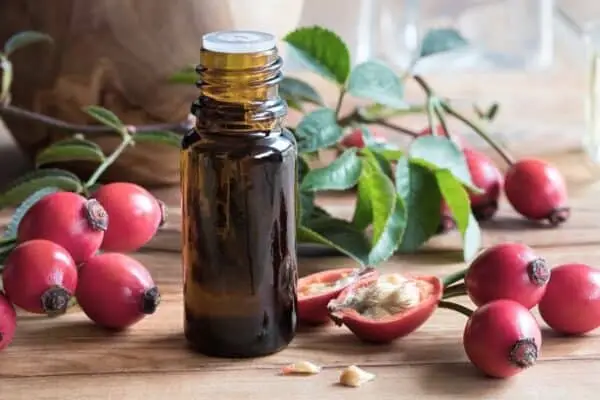
A clean, completely dry, dark glass bottle
Instructions
Pour the jojoba and apricot kernel or sweet almond oil into your clean glass bottle.
Add the calendula or herbal-infused oil.
Close the bottle and gently turn it several times to combine.
Store in a cool, dark place and use with clean, dry hands.
Apply a small amount to your hands and warm it between your palms before gently massaging your shoulders, arms, legs, or feet.
If you have sensitive skin, try a small amount on an area of healthy skin first. Discontinue use if irritation develops.
What About Essential Oils?
Essential oils are concentrated plant extracts with strong fragrances. While they can be appealing in massage blends, postpartum is a time to be especially thoughtful about their use.
For mothers who are breastfeeding or spending close time with a newborn, a fragrance-free blend may be a better choice. Essential oils can cause skin irritation or allergic reactions, and a baby’s skin and respiratory system are particularly sensitive, so always check with your pediatrician beforehand if you want to add them to your homemade massage oil.
A few precautions:
Never apply undiluted essential oils directly to the skin.
Avoid applying essential oils to the breasts, nipples, or areas where a baby’s face may rest.
Do not apply essential oils to an infant unless specifically directed by a qualified healthcare professional.
Consult your healthcare provider before using essential oils if you are breastfeeding or have medical concerns.
A simple blend of organic carrier oils and a botanical infusion can be just as enjoyable if you chose to leave the essential oils out.
A Few Minutes of Massage Can Be a Lovely Way to Care for Yourself
The postpartum period places many physical demands on a new mother. Feeding, carrying, rocking, and holding a baby can contribute to tension in the shoulders, neck, wrists, hands, and back. Taking a few minutes for yourself can be a welcome opportunity to slow down and reconnect with your body.
Try setting aside five or ten minutes for a gentle self-massage:
Feet and legs: Use a little oil to massage your feet and lower legs with comfortable, gentle pressure.
Hands and forearms: Give some attention to your hands and forearms, which do so much work throughout the day.
Shoulders and neck: Gently massage areas of tension, avoiding deep pressure or any area that feels painful.
Arms: Use slow, comfortable strokes to create a relaxing moment.
If you have had a cesarean birth, significant tearing, stitches, or other birth-related injuries, avoid massaging healing areas until your healthcare provider has cleared you. Do not apply homemade herbal oils to open wounds, healing incisions, or the perineal area.
When to Consider Professional Postpartum Massage
Professional postpartum massage can be another way to support your well-being as your body adjusts after pregnancy and birth. A massage therapist experienced in pregnancy and postpartum care can adapt positioning, pressure, and techniques to your stage of recovery and individual needs.
Massage may help ease everyday muscle tension, provide relaxation, and offer time to focus on your own comfort. Your therapist can also help you address some of the physical demands of feeding, carrying, and caring for your baby.
You spend so much time caring for your little one. Remember to give yourself a little care, too.
Medical Research and Further Reading
The following peer-reviewed studies provide additional information about botanical preparations and postpartum wound care:
Use of Calendula Ointment After Episiotomy: A Randomized Clinical Trial — The Journal of Maternal-Fetal & Neonatal Medicine (2022).
The Impact of Aloe Vera and Calendula on Perineal Healing After Episiotomy in Primiparous Women — Journal of Caring Sciences (2013).
The Effect of Chamomile Cream on Episiotomy Pain in Primiparous Women — Randomized clinical trial.
The Effect of Lavender on Pain and Healing of Episiotomy: A Systematic Review — Review of six clinical trials.
A note about the research: These studies investigated specific topical preparations, often under clinical supervision. They do not establish that homemade massage oils can heal postpartum wounds or replace medical care. More research is needed to determine which botanical preparations are effective and safe for different postpartum skin and wound-care needs.